
Pain vs Injury: What’s the Difference?
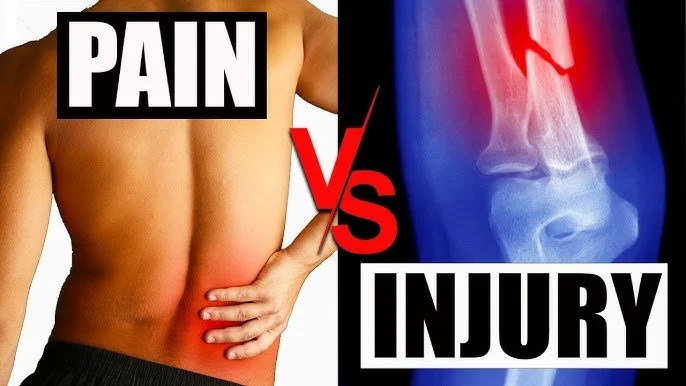
Pain and injury are often used interchangeably, but they’re not the same thing.
Understanding the difference between the two can change how you respond to symptoms, how confident you feel moving, and how well you recover.
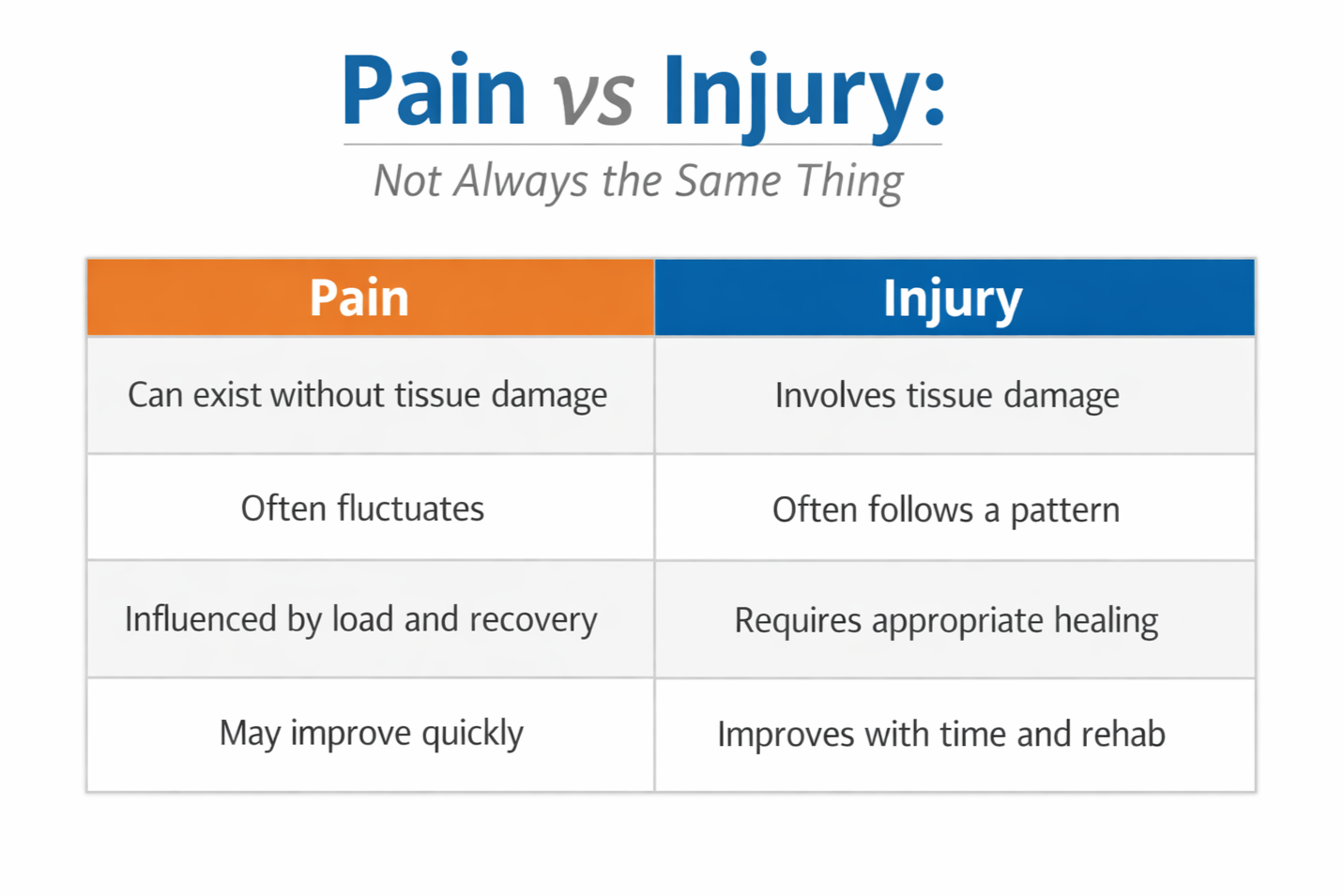
Pain is a signal from the body. An injury involves damage to tissue. While they often occur together, one does not automatically mean the other.
Understanding Pain
Pain is the body’s warning system. It’s influenced not only by what’s happening in tissues, but also by how the body is coping with load, movement, fatigue, stress, and recovery.
Modern pain science shows that pain can exist without tissue damage and that tissue damage can sometimes exist without ongoing pain (Raja et al., 2020). This doesn’t make pain “imaginary” — it simply means pain is more complex than damage alone.
When tissues are overloaded, sensitive, or not well conditioned for what’s being asked of them, pain can appear even though no structural injury has occurred.
What Do We Mean by Injury?
An injury refers to actual damage to body tissues, such as muscle tears, ligament sprains, tendon injuries, or fractures. These often occur after a clear event or repeated overload and typically require appropriate healing time.
That said, injuries don’t always cause severe pain, especially once initial inflammation settles. This is one reason imaging findings don’t always match how someone feels or functions (NICE, 2016).
Pain and Injury Aren’t Always the Same
Pain and injury overlap, but they’re not identical.
Pain can fluctuate day to day, influenced by activity levels, fatigue, and stress. Injury tends to follow a more predictable healing timeline. Pain may improve quickly with simple changes, while injury usually improves with time and appropriate rehabilitation.
This difference is why pain intensity alone isn’t a reliable measure of how serious a problem is.
Why Pain Can Persist Without Ongoing Injury
In some cases, pain continues even after tissues have healed. In others, no clear injury can be identified at all.
This often relates to how the body adapts to protect itself. Reduced movement, loss of strength, altered movement patterns, and increased nervous system sensitivity can all contribute to ongoing pain (Moseley & Butler, 2015).
Over time, the body becomes very good at guarding an area — sometimes even when it no longer needs to.
When Pain Should Be Taken Seriously
While pain doesn’t always mean injury, there are situations where assessment is important. Pain that is worsening, limiting daily activities, affecting sleep, or accompanied by symptoms such as weakness, numbness, or tingling should be reviewed.
Early assessment helps determine whether tissue injury is present or whether the issue relates more to load tolerance, movement efficiency, or recovery.
How Physiotherapy Helps
Physiotherapy helps clarify whether pain is related to injury, overload, or sensitivity.
Assessment looks at how you move, how your body handles load, and whether certain areas are working harder than they should. Treatment focuses on restoring movement, rebuilding strength and confidence, and gradually reloading tissues so the body becomes more resilient (Brukner & Khan, 2017).
This approach helps avoid unnecessary rest while reducing the risk of ongoing or recurrent pain.
Why This Matters for Injury Prevention
Treating every ache as an injury can lead to unnecessary avoidance and deconditioning. Ignoring pain altogether can allow small issues to build over time.
Understanding the difference between pain and injury allows for a more balanced approach — one that encourages appropriate movement, supports recovery, and reduces the risk of longer-term problems (O’Sullivan et al., 2018).
Physiotherapy Support
If you’re unsure whether what you’re experiencing is pain or an injury, a physiotherapy assessment can provide clarity and direction.
At Jaquet Health, we focus on helping people understand their symptoms, move with confidence, and address issues early to reduce the risk of ongoing pain or injury.
📞 Contact us to book an appointment or to learn more.
References
Raja, S. N., Carr, D. B., Cohen, M., et al. (2020). The revised International Association for the Study of Pain definition of pain. Pain, 161(9), 1976–1982.
Moseley, G. L., & Butler, D. S. (2015). Fifteen years of explaining pain: The past, present, and future. Journal of Pain, 16(9), 807–813.
Brukner, P., & Khan, K. (2017). Clinical Sports Medicine (5th ed.). McGraw-Hill Education.
National Institute for Health and Care Excellence (NICE). (2016). Low back pain and sciatica in over 16s: assessment and management (NG59).
O’Sullivan, P., Caneiro, J. P., O’Keeffe, M., et al. (2018). Cognitive Functional Therapy: An integrated behavioural approach for chronic pain. Physical Therapy, 98(5), 408–423.